



Search is changing fast. AI answers now pull insights from your content and deliver them directly to users without sending traffic to your site. Your brand may gain visibility while your clicks stay flat. Influence shows up, but attribution does not.
Marketers now need a new way to measure influence. The real task is creating attribution for AI answers that captures visibility and impact before the click.
This article introduces a simple framework built on four essentials: visibility, resonance, impact, and feedback.
Author’s Note
Before we get into it: this chapter is part of my ongoing AEO/GEO series on how content discovery and search behavior is changing, and what you need to do to stay visible on search. If you’d like the fuller foundation, here are the key posts referenced throughout this series:
Foundations of AI Search Behavior
- AEO Maturity Model
- How AI Overviews Impact CTR and SEO
- How Generative AI Is Changing Search Behavior
- The Psychology of Conversational Search
- Mapping Content to User Goals & Intent
AI Retrieval, Ranking & Synthesis
- How Generative AI in Search Works
- Structuring Content for AI Extraction
- Authority Signals & Schema Markup for AEO
- Structuring Content for Multi-Turn AI Conversations
Measuring AI Visibility & Performance
When AI Answers Replace Clicks
Traditional analytics were built for a world where users visited your site to engage with your content. AI has changed that. Much of the interaction now happens off-site, inside AI-generated responses, with little to no trace in your reporting tools.
As generative search takes on more of the work, your content can shape decisions without triggering a single measurable action. The real signals are happening elsewhere, and marketers must account for the influence created before a user ever clicks.
Defining Attribution 2.0: From Traffic to Influence
Traditional attribution measures movement like clicks, pageviews, sessions. But today, influence often comes first, which means attribution should be about understanding and tracking momentum. It should be about seeing how ideas spread, how your brand authority grows, and how your content shapes perceptions before any measurable action occurs.
Marketers must then focus on how AI represents and amplifies content. Every summary, recommendation, or synthesized answer powered by AI can extend reach and impact, often without a direct click.
Understanding how these systems interpret and showcase your content allows marketers to map influence across the broader ecosystem: capturing visibility, authority, and engagement that traditional analytics would otherwise miss.
The Framework: Measuring Influence in the AI Ecosystem
Measuring influence in the AI ecosystem means looking beyond traditional metrics. This framework focuses on four key dimensions: visibility, resonance, impact, and feedback.
Layer 1: Visibility
Visibility in this era is not just about showing up in the search results anymore, rather about how often your brand or content is noticed or referenced within AI-generated outputs. The goal here is simple: see if your ideas are being seen and recognized, even when users don’t click through to your site.
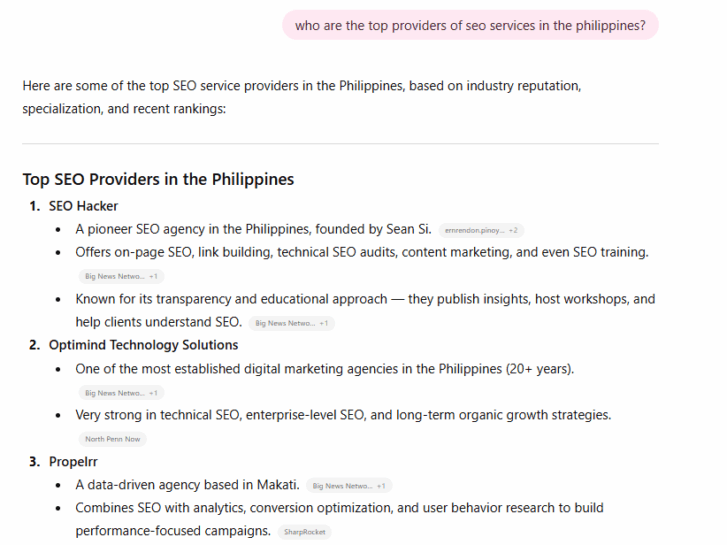
- Audit your AI presence. Regularly search your brand, products, and key content topics across AI engines like ChatGPT, Gemini, Perplexity, Claude, and Copilot. Record where your content is mentioned, summarized, or notably absent to understand how AI systems are interacting with your content.
- Track citations. Use LLM visibility trackers, or set up alerts for AI-generated mentions. These tools show when large language models (LLMs) such as ChatGPT, Gemini, Claude, or Perplexity reference your brand, cite your content, or recommend your products. This helps you understand where, how, and how often your brand appears across AI-generated answers. Some of the leading LLM visibility trackers available include:
- SE Ranking – combines traditional SEO tools with AI search monitoring. Its AI Search Toolkit tracks brand mentions, positions, and competitors across platforms like ChatGPT and Google AI, giving a clear view of your AI-driven presence.
- Ahrefs Brand Radar – shows how AI chatbots represent your brand across platforms like ChatGPT, Google AI, Perplexity, Gemini, and Microsoft Copilot. It helps businesses monitor AI mentions, benchmark against competitors, and uncover opportunities to strengthen their presence in AI-generated search results.
- Profound AI – provides advanced insights into how AI interprets content and optimizes product placement, helping companies achieve significant visibility growth in AI-driven search environments.
- Enhance discoverability. Improve your content’s likelihood of being cited by implementing schema markup, ensuring factual clarity, and optimizing key entities. Clear, structured content helps AI models confidently reference your brand.
- Benchmark visibility. Develop a monthly “AI Share of Voice” score that tracks the percentage of AI-generated answers where your brand appears for target queries. This provides a measurable way to monitor your growing influence over time.
Visibility is the first step in building influence. If AI systems don’t surface your content, it can’t shape decisions or guide conversations.
Layer 2: Resonance
Visibility alone is not enough; your content also needs to resonate. Resonance is all about how your brand is understood and remembered. And in the world of AI, that means measuring whether AI systems cite your brand positively, accurately, and frequently, in a way that carries meaning and relevance.
Tracking resonance means looking at how frequently your content is used in AI outputs, whether it’s summarized correctly, and if the core ideas are preserved and represented effectively.
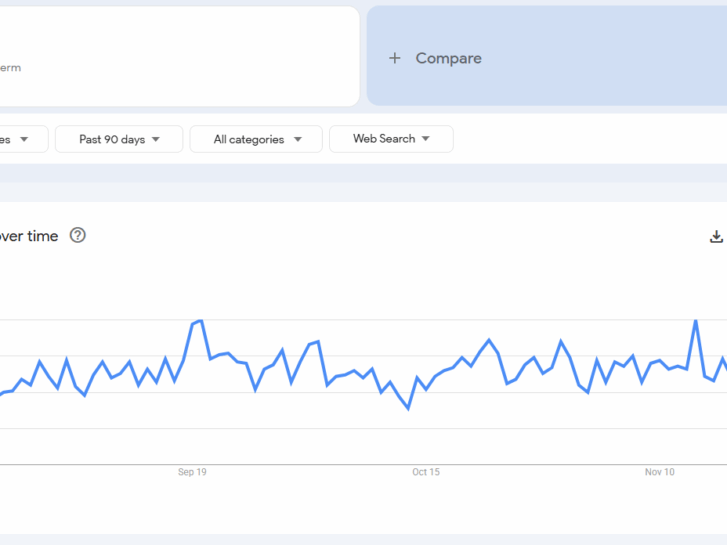
- Monitor branded search volume. Track increases in searches for your brand or products using tools like Google Trends and Google Search Console. Look for correlations between AI-driven visibility spikes and upticks in search interest to see if AI exposure is influencing awareness.
- Measure sentiment. Analyze the tone of conversations about your brand using social listening tools or AI-driven sentiment analysis platforms. Monitoring sentiment before and after major AI visibility events helps you understand how your brand is perceived and whether AI references are building positive authority.
- Survey recall. Conduct periodic audience surveys or polls to measure unaided brand awareness within your category. Understanding how well your brand sticks in users’ minds provides a direct signal of resonance and influence.
- Create a “Resonance Dashboard.” Combine sentiment, branded search data, and social conversation metrics into a single composite Influence Score. This view will allow marketers to track how effectively AI-driven visibility is translating into brand recognition, perception, and authority over time.
Paying attention to signals like citation frequency, sentiment, and source trust can let marketers start to understand not just if they’re being referenced, but how they’re being referenced. This helps monitor whether the brand is resonating in the AI conversation, building authority in ways that may not show up in clicks or pageviews but are essential to long-term influence.
Layer 3: Impact
Visibility and resonance are powerful on their own, but their true value shows when they translate into meaningful business outcomes. Impact is where AI-driven presence moves beyond awareness and perception, shaping real decisions, behaviors, and conversions. This is the stage where marketers look for proof that being cited, recommended, or surfaced by AI systems is driving tangible value: more qualified traffic, stronger leads, higher engagement, or even direct revenue lifts.
- Run correlation analysis. Compare periods with high AI visibility against shifts in website traffic, conversions, lead quality, or pipeline growth to identify relationships between AI exposure and business performance.
- Define proxy conversions. Track secondary indicators of influence such as increases in branded organic searches, direct type-in visits, social engagement, or repeat interactions, to capture the impact that happens before a user ever clicks.
- Implement attribution modeling. Use regression, media mix models, or Bayesian inference to estimate the indirect contribution of AI-driven exposure, giving you a clearer picture of influence that isn’t captured by last-click metrics.
- Report “Influence-Weighted ROI.” Layer your traditional ROI or ROAS with an influence multiplier based on inferred impact from AI visibility and resonance, creating a more complete assessment of how AI contributes to revenue and brand growth.
It’s not just about being seen or remembered by AI. It’s about whether that exposure changes what people do. When you tie AI visibility and resonance back to these measurable outcomes, you can clearly see how influence is contributing to your business growth.
Layer 4: Feedback
Influence is not a one-time achievement; it’s a cycle. And feedback is where true influence takes shape. It becomes the engine that keeps your visibility, resonance, and impact evolving.
As AI systems adapt based on patterns, signals, and relevance, marketers must do the same. Take insights from AI mentions, audience reactions, and performance indicators, then feed them back into the content strategy to strengthen the signals that guide how AI engines interpret your brand.
- Map success signals. Identify which types of content (whether they are guides, data-backed studies, FAQs, or definitions) appear most frequently in AI-generated answers. This helps you understand what formats and topics AI engines perceive as most authoritative.
- Strengthen high-performing entities. Identify the people, products, locations, or concepts that AI already associates with your brand. Expand these pages, improve internal linking, and reinforce supporting content so AI models develop an even stronger, more consistent understanding of these entities.
- Improve factual density. Refine your top-performing content to be clearer, more concise, and richer in well-structured information. AI models favor content that’s easy to parse and confidently cite, so improving clarity and accuracy increases your chances of repeated inclusion.
- Close the loop with regular audits. Refine your top-performing content to be clearer, more concise, and richer in well-structured information. AI models favor content that’s easy to parse and confidently cite, so improving clarity and accuracy increases your chances of repeated inclusion.
Influence is supported through repetition, clarity, and constant improvement. And feedback is the mechanism that keeps your authority alive, relevant, and growing.
Operationalizing the Framework
Putting the framework of measuring influence in AI into action simply means integrating each layer into what you already do. Visibility, resonance, impact, and feedback can be layered directly onto the processes you already use, transforming traditional analytics into a more adaptive, AI-aware discipline.
- Create a unified “AI Attribution Dashboard” that combines key metrics from all four layers (visibility, resonance, impact, and feedback) into a single dashboard. Include AI mentions, sentiment analysis, and conversion or proxy data to create a holistic view of how your content is performing in AI-driven environments.
- Set quarterly KPIs. These benchmarks provide clear targets and allow your team to gauge the effectiveness of their efforts. Define measurable goals to track progress over time such as:
- Increasing your “AI Share of Voice” by 20%
- Improving your overall Influence Score by 15%; or
- Achieving a 10% lift in traffic correlated with AI visibility.
- Align cross-functionality. Bring together SEO, content, brand, analytics, and communications teams to agree on influence metrics, share insights, and coordinate actions. Cross-functional collaboration ensures that AI attribution becomes a shared responsibility.
- Document assumptions. Treat your AI attribution model as iterative. Clearly note any assumptions, such as how AI visibility or resonance is weighted, and refine these metrics as transparency and data from AI platforms improve. This approach keeps your model accurate and adaptable.
- Educate stakeholders with influenced-based storytelling. Shift the narrative from traditional traffic- or click-focused reporting to one that emphasizes influence. Explain how AI visibility and resonance drive authority, shape perception, and contribute to measurable outcomes, helping them understand the full value of your AI-optimized content.
Integrating these steps into your regular workflow lets businesses create a system that consistently measures how AI represents a brand—and continuously improves the presence in AI-generated answers. This approach keeps your strategy adaptive, measurable, and aligned with how people now discover information.
Key Takeaway
The marketing landscape is shifting dramatically—from clicks to credibility, and from sessions to significance. Traditional metrics can no longer capture the full story of influence in an AI-driven world. Visibility, resonance, impact, and feedback provide a modern framework for understanding how your content shapes perception, builds authority, and drives results even when users never click.
In the age of AI answers, the brands that win are those that are recognized, referenced, and trusted. Influence now extends beyond what is seen on the page; it exists in the moments AI surfaces your expertise and shapes decisions.
The challenge for marketers is clear: measure the unseen, track the indirect, and embrace a new standard of attribution that values influence as much as traffic. Those who do will lead the way in defining success for the AI era.
The post Attribution in the Age of AI Answers appeared first on SEO Services Agency in Manila, Philippines.


