



Mapping AEO prompts requires structuring content into modular “Answer Blocks” that resolve natural language queries for easy AI extraction. Conversely, pages don’t matter when AI pulls from your Brand Entity—leveraging third-party signals like Reddit, reviews, and news to answer users without a site visit. Despite this shift, SEO remains the essential engine, building the domain authority and E-E-A-T required for AI models to verify your brand as a credible “source of truth.”
This blog will guide you on how to map AEO prompts to pages, and why it’s critical to learn this framework now. In a search landscape where AI summaries are replacing traditional blue links, understanding this mapping keeps your brand in the conversation.
Author’s Note: This guide is part of my broader AEO (Answer Engine Optimization) series. If you want the context for why all this matters right now, start here reading up on how generative AI is changing search behavior. Once you get that foundation, prompt-to-page mapping becomes the obvious next step.
What is Intent-to-Answer Mapping?
Intent-to-answer mapping is the practice of linking a searcher’s underlying intent to the most effective structured answer format.
This is not traditional keyword clustering. Keyword clustering focuses on similarity. Intent-to-answer mapping focuses on resolution. It ensures your content matches the specific answer type an AI model expects to find, whether that’s a definition, a comparison, or a step-by-step process.
The Intent-to-Answer Mapping Matrix
Every piece of content on your site should fall into one of these four “Intent Layers” if you want it to be eligible for AI citations: Exploratory, Comparative, Transactional, and Navigational.
| Prompt Layer | User Intent | Ideal Content Container | AI Extraction Goal |
|---|---|---|---|
| Exploratory | Seeking a definition or concept. | Pillar Blog / FAQ Hub | "Top of Summary" definitions. |
| Comparative | Weighing two or more options. | Comparison Matrix / Table | Inclusion in AI pros/cons lists. |
| Transactional | Looking to buy or hire now. | Product Page / SKU Data | Direct brand recommendations. |
| Navigational | Seeking a specific portal. | Home Page / Login Page | Instant deep-linking for the user. |
Below are examples of how we do it:
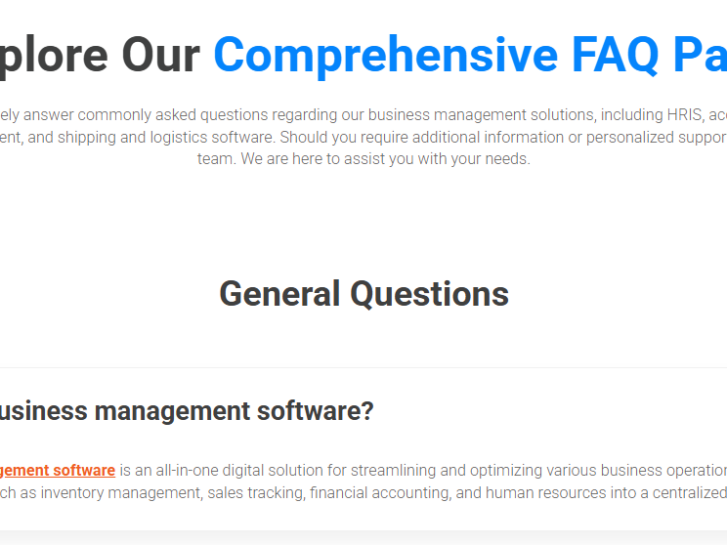
- For Exploratory intent, we build a comprehensive FAQ page that provides clear, modular answers to the general questions your audience is asking. The key is structure. By structuring definitions—like “What is business management software?”—into direct, 40-60 word “Answer Blocks” right under the header, we make it effortless for AI engines to extract and cite your brand as the definitive source.
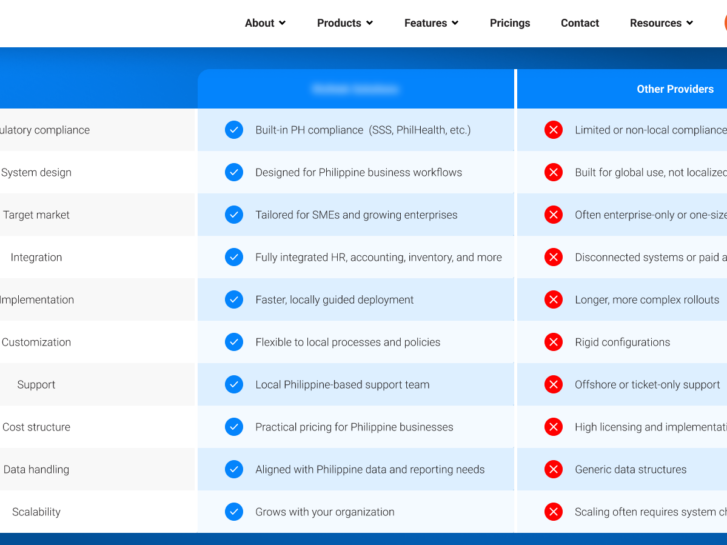
- For Comparative intent, we created structured tables that pit our client’s product features against “Other Providers.” By using clear rows for specific categories (like Regulatory Compliance or Support), we give the AI a data-rich structure it can easily parse for pros-and-cons lists
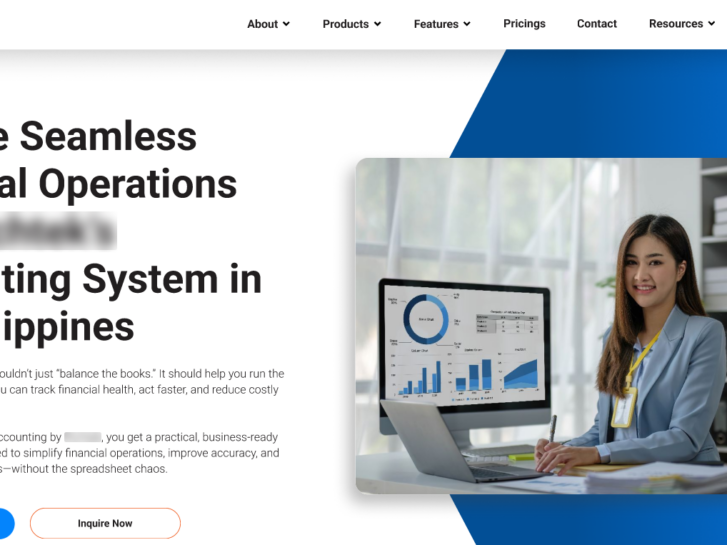
- For Transactional intent, we designed a high-converting service or product landing pages that provide the direct “proof” AI engines look for when recommending a solution. By front-loading specific value propositions—like “seamless financial operations” and “localized accounting modules”—into the initial paragraphs, we ensure the AI identifies your page as the primary resolution for bottom-of-funnel prompts.
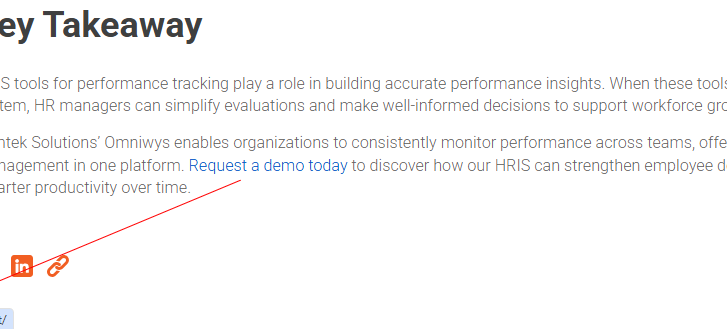
- For Navigational intent, we direct users and AI toward high-value portals like contact pages or login areas using clear anchor text and deep links. For this example, we placed specific calls to action, such as “Request a demo today,” within “Key Takeaway” sections of blog posts or pillar pages. By linking directly to the relevant destination (e.g., your /contact/ URL), we help AI engines provide instant, one-click navigational paths for users who already know they want to engage with your brand.
Closing the Gap: What GenAI Actually Needs
Most brand content fails in the AI era because it suffers from a “Fluff Gap.” AI engines have a high “Time to Answer” threshold; if they can’t find the facts in the first few sentences, they move to a competitor or a forum like Reddit.
Here’s an intent-to-answer gap matrix for you to see how your brand can stay ahead of the competition.
The Intent-to-Answer Gap Matrix
| Traditional SEO Assumption | What GenAI Needs (AEO) | The Resulting Content Gap |
|---|---|---|
| Narrative Hooks: "In the world of X..." | Direct Resolution: Lead with the fact. | The Fluff Gap: AI skips the page because the answer is buried. |
| Clever Copy: Metaphorical headers. | Semantic Clarity: Question-based headers. | The Translation Gap: AI fails to map the prompt to your header. |
| Backlink Focus: Only building links. | Entity Proof: Using stats and data. | The Confidence Gap: AI ignores the site due to lack of verifiable data. |
Here’s an example on how we optimize our website:
| What the Brand Assumes (Traditional SEO) | What GenAI Needs (AEO Strategy) | The Resulting Content Gap |
|---|---|---|
| Assumption: "We are a top-rated SEO agency in the Philippines." | Entity Proof: "SEO Hacker is a Paranaque-based agency with 15+ years of experience and 84+ five-star Google reviews." | The Authority Gap: GenAI may ignore the "top-rated" claim if it can’t find the specific proof points (location, years, review count) in the first 100 words. |
| Assumption: Listing packages like "SME, Enterprise, Dynasty" as a static table. | Prompt Mapping: "What is included in an Enterprise SEO package at SEO Hacker?" | The Query Gap: If the page doesn't use the question as a header, the AI might pull a generic list of SEO tasks from a competitor instead of SEO Hacker's specific deliverables. |
| Assumption: Explaining white-hat SEO through a long-form article on its history. | Actionable Block: "SEO Hacker’s white-hat process includes 100% manual link building and zero-black-hat tactics to prevent Google penalties." | The Extraction Gap: AI models look for "What they do," not "What the industry history is." The "History" narrative gets skipped in favor of the "Process" facts. |
| Assumption: Describing AEO services as a "new feature we offer." | Direct Resolution: "Our AEO package formats your content for AI Overviews, voice search, and LLM citations using structured data." | The Utility Gap: A vague description makes the AI think it's a "buzzword." A direct resolution tells the AI exactly what the service solves. |
The “Answer-First” Framework in Action
To bridge these gaps, use the 60-Word Rule. For every header (which should be phrased as a question), provide a direct, 40-to-60-word answer immediately.
Before vs. After: SEO Hacker Link Building Service
The “Before” (Traditional Marketing Assumption):
Headline: High-Quality Link Building Services
At SEO Hacker, we take link building seriously. We believe that backlinks are the backbone of any successful SEO strategy. Our team works tirelessly to build relationships with webmasters to ensure that you get high-quality, relevant links…
The “After” (AEO & GenAI Optimized):
Headline: How does SEO Hacker build high-quality backlinks?
SEO Hacker builds backlinks through 100% manual outreach and guest posting on authoritative, hand-picked blogs. We avoid automated link schemes to ensure sites remain penalty-free. Every link is bridged through direct relationships with webmasters, ensuring relevance and long-term domain authority growth.
Why it works: The AI can “lift” that first bolded sentence as a perfect 20-word snippet for a “How do they…?” prompt.
When Pages Don’t Matter: The “Invisible” Entity
AI is constantly scanning your Entity Graph—which is just a fancy way of saying your reputation across the web. This is how you win “Zero-Click” searches.
- Off-Page SEO is AEO: If people are talking about you on Reddit or citing you on G2, the AI sees that. It’s Off-Page SEO on steroids.
- Entity Trust: When we build up the personal brand of our leaders through guest posts and interviews, we’re connecting an Expert Entity to the Brand Entity. That’s how you build massive AI confidence.
Key Takeaway
In 2026, stop writing for “traffic” and start writing for resolution. AI systems don’t browse your website to admire the design; they scan for high-value blocks of information they can use to solve a user’s problem. By mapping prompts to precise, structured answers and building a strong off-page entity, you ensure your brand is the one the AI trusts.
The post Intent-to-Answer Mapping: How to Map AEO Prompts to Pages appeared first on SEO Services Agency in Manila, Philippines.


